Rebecca’s Story: Feeling Human Again Through Whole-Person Cancer Support
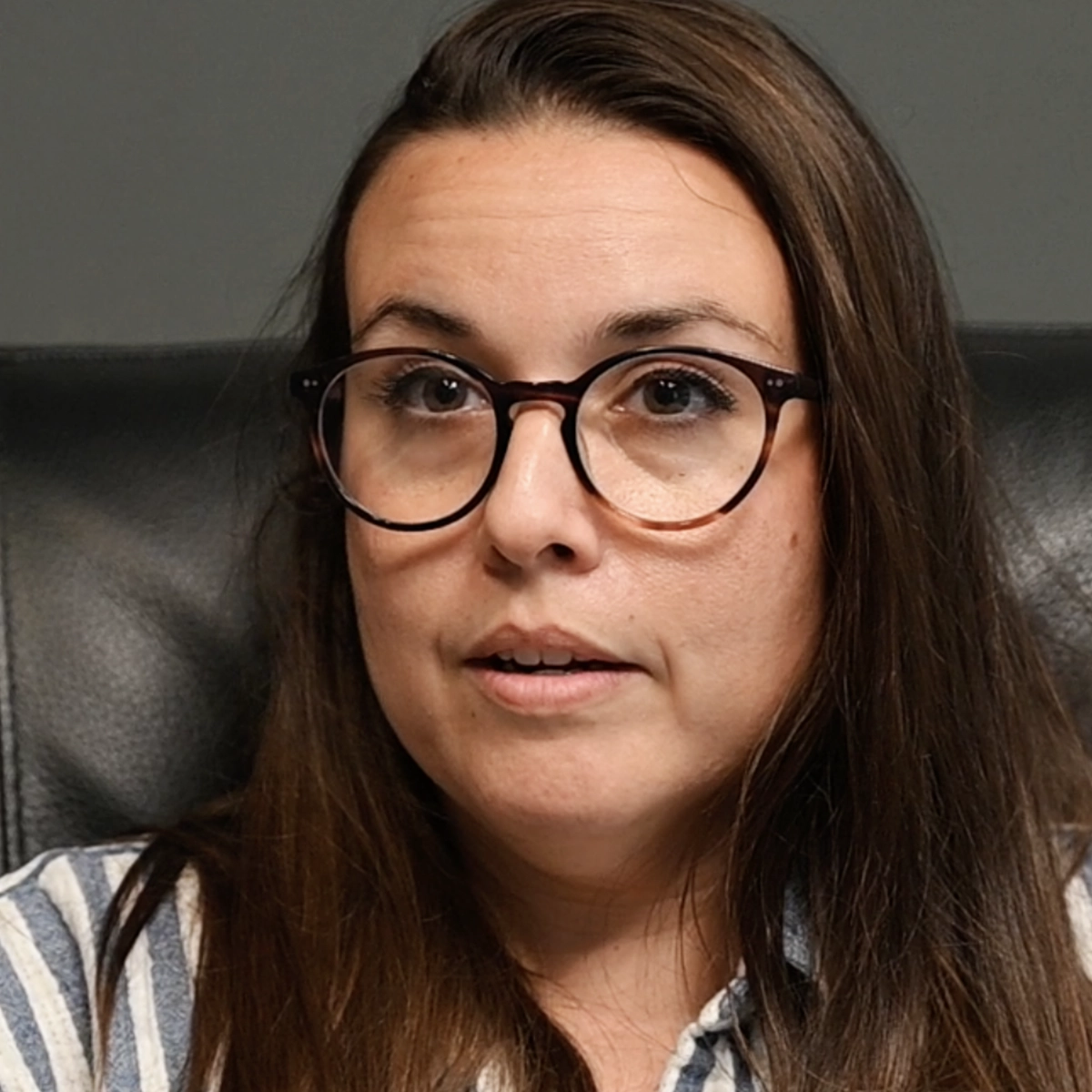
When Rebecca was diagnosed with breast cancer, it came as a complete shock.
She was a busy mom of two, a full-time speech-language pathologist working with special needs children, and an active volunteer in her community. She had no family history of breast cancer, and at first, even her doctors did not suspect cancer. It took more than six months to receive the diagnosis.
After undergoing a double mastectomy, Rebecca’s oncologist recommended moving immediately into the conventional cancer treatment path. But Rebecca knew she needed more.
For years, she had managed other health conditions, including POTS, heart issues, and a heart arrhythmia, with the support of integrative medicine. She did not want to enter cancer treatment without that same kind of whole-body support.
“I didn’t want to enter cancer treatment without incorporating some sort of integrative care,” Rebecca shared.
Through a referral, Rebecca was introduced to Dr. Habib at Next Health. From their very first conversation, she felt something different. He listened carefully, asked about the full story of her diagnosis and surgery, and looked beyond the cancer itself.
“Every other doctor that I had interacted with was just looking at me like a traditional oncology patient,” Rebecca said. “He saw me as a whole person, not just a breast cancer case.”
Rebecca chose to combine conventional cancer treatment with integrative support at Next Health. As she went through radiation and recovered from major reconstructive surgery, Dr. Habib supported her with hyperbaric oxygen therapy, IV vitamin therapy, and other personalized care designed to help her body heal.
Her surgery was extensive: a 10-hour deep flap reconstruction using tissue from the abdomen to create a natural breast reconstruction. Because of Rebecca’s underlying heart condition and POTS, her cardiologist and plastic surgeon were concerned about how her body would respond.
But under Dr. Habib’s care, Rebecca recovered better than expected.
“My plastic surgeon said that due to the treatments I was doing with Dr. Habib, I was actually healing much faster than his other patients,” she said.
Even more importantly, the heart complications her doctors had anticipated did not occur. Her POTS symptoms remained stable, and Rebecca was able to stay out of the hospital and recover at home.
“I was able to remain stable and out of the hospital and able to stay at home to recover,” she shared.
But for Rebecca, the impact of Next Health went far beyond physical recovery. After months of feeling like just another patient in the medical system, she felt seen, supported, and cared for as a person.
She remembers sitting in one of the recliners at Next Health for IV treatment, being offered tea in a real teacup, and suddenly feeling the emotion of the moment.
“I felt at home and I started to cry because I felt for the first time like a human since all of the cancer had begun,” Rebecca said.
That compassion extended to her entire family. The team welcomed her parents when they came to support her. They cared for her eight-year-old daughter with snacks, warmth, and kindness, making the experience less frightening for her children.
Rebecca also praised Patty, a member of the Next Health team, for her patience and skill during IV treatments. Because of Rebecca’s medical history and low blood volume, finding a vein can be extremely difficult. At other medical offices, that process had often felt rushed or aggressive. At Next Health, the team took their time, warmed her arm, used heating pads, and made sure she was comfortable.
“These are small kindnesses you don’t get in other doctors’ offices,” Rebecca said.
A key part of Rebecca’s healing journey was also searching for answers. Because she had no family history or genetic explanation for her breast cancer, she wanted to understand why it had happened and what she could do to reduce the risk of recurrence.
Dr. Habib helped her explore potential root causes through comprehensive testing, including hormone evaluation, environmental exposure testing, mycotoxin testing, and heavy metal assessment. That deeper investigation revealed a high mycotoxin load, likely connected to previous black mold exposure.
For Rebecca, that insight mattered deeply.
“I didn’t want to just remove it and radiate it,” she said. “I wanted to make sure, I’d like to live a long life. I have children. How do we prevent this from happening again?”
Today, Rebecca sees Next Health as a rare bridge between conventional medicine and forward-thinking integrative care. Because Dr. Habib is an MD, he is able to coordinate with her oncologists and surgeons while also looking through a broader lens at immune health, environmental factors, recovery, and long-term prevention.
“I would definitely recommend Next Health for any person that is dealing with cancer care,” Rebecca said.
For Rebecca, Next Health offered more than treatment. It gave her a place where she felt safe, supported, and human, a place where her recovery, her family, and her future all mattered.